Security Systems Anhor — Semantic SEO and Drupal Website Architecture for Integrated Security, Fire Protection, Access Control and Building Systems
Semantic SEO and Drupal website architecture for Security Systems Anhor, so a wide set of related building-security and electrical systems could be found as individual services and still read as one integrated contractor.
Overview
Integrated Security Systems for Commercial Buildings
Security Systems Anhor provides integrated design, manufacturing, installation, and maintenance of security and building infrastructure systems, including fire protection, access control, video surveillance, telecommunications, and electrical systems. The digital work was a Drupal website with keyword research, a semantic core and an SEO-oriented structure so those related services could be found without collapsing into one generic page.
Manufacturing Profile
Security Systems Anhor designs, manufactures, installs and maintains integrated security and building infrastructure systems. The source also names cost estimation and commissioning where applicable.
This is an engineering and systems contractor for commercial buildings, not a claim that every listed capability was delivered together on a single site.
Security and alarm systems; fire detection and fire protection; access control; video surveillance; television systems; telephone systems; computer networks and telecommunications; electrical installation and power supply; electrical lighting; electronic article surveillance and anti-theft systems; public address and sound systems.
No equipment models, part numbers or technical specifications are stated.
Not disclosed. The source does not name panel enclosures, cable types or detector materials.
Commercial buildings, offices, large retail centers and other substantial facilities. Named sites, tenders and government contracts are not in the source.
Business Challenge
Anhor already had a wide, technically related offering across security, fire, access, CCTV, communications and electrical systems. The digital problem was to make that range findable without flattening it into one contractor paragraph.
Overlapping search intent across those systems makes a generic services page insufficient. Visitors and search engines needed a hierarchy that kept the integrated capability visible and still let each system be found.
Research keywords and competitors
Build a detailed semantic core and map it to the site
Organize a broad technical service taxonomy
Develop a Drupal website with SEO-oriented architecture and UX/UI improvements
Improve the site’s ability to attract relevant audiences, without inventing ranking targets
Niche Segmentation
Security and Alarm Systems
Security and alarm systems for commercial buildings, as a core service area in the source.
Give alarm and security intent its own destination, then link it to fire, access and CCTV so the company still reads as an integrated contractor.
Digital Architecture
The confirmed digital ecosystem is the Drupal website, keyword and competitor research, a semantic core, SEO-oriented architecture and page mapping, and UX/UI optimization.
Paid advertising, social programmes, CRM platforms and AI-search tools are not listed as delivered work.
The site had to hold an integrated contractor story and a taxonomy of related systems: security, fire, access, CCTV, communications, electrical infrastructure, anti-theft and public address, plus design, installation and maintenance as ways those systems are bought.
Exact historic URLs, Drupal version and modules are not disclosed.
The semantic model connected systems, components, installation, maintenance and commercial-building applications. Mapping was the deliverable: intent attached to structure, not a spreadsheet left unused.
Keyword volumes and competitor names are not stated.
Marketing Strategy
The documented strategy is search-led industrial SEO: keyword research, competitor analysis, a detailed semantic core, mapping onto an SEO-oriented Drupal architecture, and UX/UI work to make a wide technical catalogue usable.
No article count, publishing calendar or ranking target is stated.
The site was meant to help relevant technical and facilities buyers find a system page and then make contact. No form mix, conversion rate or lead volume is published.
This project is described as website development and semantic SEO for a building-security contractor.
No ChatGPT ranking, Perplexity citation, Gemini visibility or AI Overview result is claimed.
Systems, components, installation and maintenance are treated as related entities in the information architecture. That topical model is useful for modern search in principle. The semantic and entity structure built for this project creates a clearer foundation for both classic search engines and current AI systems. No measured results in ChatGPT, Perplexity, or similar tools are claimed for this engagement.
Implementation
Confirmed shape of the work, without inventing dates: understand the integrated offering; research keywords and competitors; build the semantic core and map it; develop the Drupal site with SEO-oriented structure and UX/UI improvements; organize the service taxonomy so individual systems remain findable.
- Phase 1
Understand the integrated offering
Map the stated service areas and the cycle of design, manufacturing, installation, estimation, commissioning where applicable, and maintenance.
- Phase 2
Keyword and competitor research
Analyse how buyers search for related building systems. Competitor brands are not named.
- Phase 3
Semantic core and page mapping
Build a detailed semantic core and attach intent to the website structure so overlapping systems do not share one generic URL.
- Phase 4
Drupal website, UX/UI and SEO structure
Implement the taxonomy in a Drupal site with SEO-oriented architecture and UX/UI improvements. Version and modules are not disclosed.
Results
The documented outcome is structural: a Drupal website with an SEO-oriented architecture, a semantic map of related building-security systems, and a clearer way for technical visitors to find individual services without losing the integrated contractor picture.
Verified traffic, rankings, leads, conversions and revenue are not in the source. Not disclosed. Duration is not stated.
Expert Insight
For a technical B2B company, SEO starts to work when the website follows the way the work is bought. Security, fire, access, CCTV, cabling and power are related, but they are not one query.
A semantic core is useful only if it is mapped onto pages. Drupal, in this record, is the CMS that held that map. It is not a general verdict on platforms.
Where the source is silent — rankings, leads, named buildings, old-site screenshots — the correct public line is Not disclosed.
As buyers use AI assistants to shortlist security contractors, a hierarchy that keeps the integrated offer visible and each system findable is the part that still transfers. The company is not described here as a manufacturer.
Project Overview
Security Systems Anhor works with integrated engineering and security systems for commercial buildings, offices, large retail centers and other substantial facilities. The company designs, manufactures, installs and maintains those systems, and the source also names cost estimation and commissioning where a project needs them.
The listed service areas are security and alarm systems; fire detection and fire protection; access control; video surveillance; television systems; telephone systems; computer networks and telecommunications; electrical installation and power supply; electrical lighting; electronic article surveillance and anti-theft systems; and public address and sound systems.
Those are the company’s service areas. This record does not treat them as proof that every system was installed on every object, and it does not name buildings, contracts, equipment models or certifications.
The SEO Challenge
A company with this many related systems has a visibility problem that a slogan cannot fix. Search intent overlaps: security, fire protection, access control, CCTV, networking and electrical engineering are close enough to confuse a thin site, and different enough that one services page will bury most of them.
A generic contractor page can introduce Anhor. It cannot be the page for a fire-detection system, an access-control door, a camera run and a structured-cabling closet at the same time. The digital job was to keep the integrated picture and still make individual services discoverable.
SEO Research and Semantic Architecture
The documented research work is keyword analysis, competitor analysis, a detailed semantic keyword core, and mapping of relevant intent onto the website structure. The aim was a coherent hierarchy of related systems rather than a flat list or a single block of copy.
Useful relationships in that map are system to component, design to installation to maintenance, and building type — office, retail, commercial — where the source supports those audiences. Keyword volumes, competitor brands and ranking tables are not in the source. Not disclosed.
Website Development and UX/UI
The website was a Drupal project. The source describes SEO-oriented architecture and page mapping, organization of a broad technical service taxonomy, UX/UI improvements and website optimization, with the goal of better organic visibility and a better chance of attracting a relevant audience.
Clear navigation and service landing pages matter here because a technical visitor is looking for a system, not a mood. Drupal version, theme, modules and exact historic URLs are not disclosed. This Case Study is a record of the historical project, not a description of the current Next.js site.
Integrated Engineering Solutions
The commercial offer is an integrated security and building-systems contractor: design, production, installation and maintenance across the listed systems. Electrical infrastructure, lighting, telecommunications and anti-theft systems sit in the same family because they belong to the same kind of commercial building, not because every job included every trade.
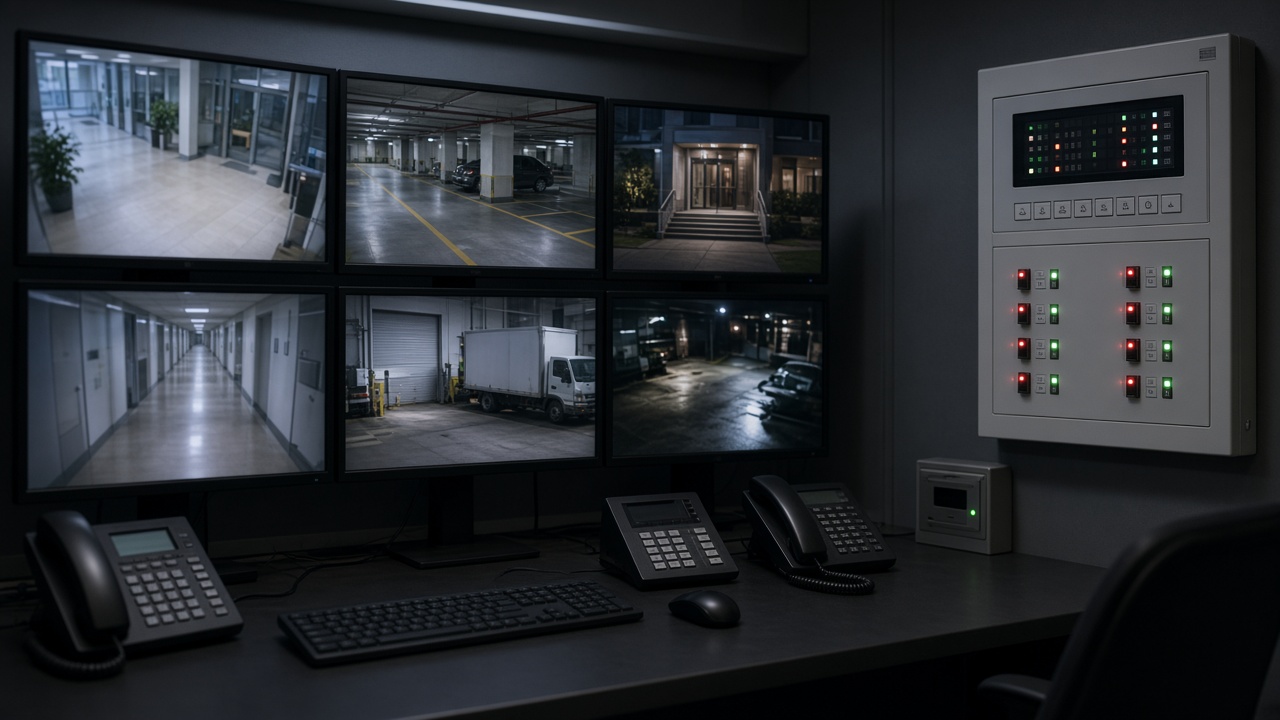
Photographs in this Case Study illustrate those service areas. They are not authentic photographs of documented Anhor installations. No original screenshots of the old Drupal site were available when this record was created.
Project Scope and Outcomes
The documented work is research, semantic mapping, a Drupal website with an SEO-oriented structure, and UX/UI optimization for a company whose catalogue is a set of related building systems.
Intended SEO benefits — stronger organic visibility and a clearer path for relevant visitors — are described in the source as aims of that structure. Verified traffic, rankings, leads, conversions and revenue are not in the source. Not disclosed. Duration is also not stated.
Lessons for Industrial and Technical B2B SEO
A wide engineering portfolio becomes searchable when the website copies the way the work is actually bought: by system, by component, by installation or by maintenance, then linked back to the integrated contractor.
The same lesson applies to other industrial and technical businesses where products, components, installation and service form one solution. The map has to be honest. If a number is missing, the public line is the structure, not a fabricated percentage.
Security and Building Systems
Frequently Asked Questions About Security Systems Anhor
In this record, Security Systems Anhor works with a related set of building systems: security and alarm, fire detection and fire protection, access control, video surveillance, television, telephone, computer networks and telecommunications, electrical installation and power supply, electrical lighting, electronic article surveillance and anti-theft systems, and public address and sound.
That is the company’s stated service range. It is not a claim that every system was installed together on every building. Design, manufacturing, installation, estimation, commissioning where applicable, and maintenance sit across those areas.
As related systems under one integrated contractor, each with a destination that matches how people search. A generic services page cannot carry fire protection, access control and CCTV at once without burying all three.
Shared copy about design and maintenance belongs on the company or solutions level. System pages should describe the actual job. That is the SEO problem this case is about: a wide taxonomy that still reads as one capability.
Because buyers do not search only for the company name. They search for the system, the component, the installation or the maintenance job. Competitor and keyword analysis show how those intents are worded so the site can map them instead of forcing everything onto one URL.
No keyword volume or ranking table is published for Anhor. The source confirms the research work, not the scores.
By giving specialized intent a page, then linking it back to the integrated offering. A visitor looking for structured cabling or power supply should not have to infer it from a paragraph about alarms.
On the Anhor project the documented implementation is a Drupal site with an SEO-oriented structure, UX/UI work and page mapping from the semantic core. Exact historic URLs are not reconstructed.
Start from the real offering, not from a slogan. Group related systems so the company still looks integrated. Give overlapping intents — design versus installation versus maintenance — enough separation that pages do not copy each other.
Then be honest about evidence. If there are no measured rankings or leads, report the structure and the research. Invented percentages help no one who buys or specifies these systems.
Comments
Lukas SchneiderIndustrial marketing consultant Anhor lists fire protection, access control, CCTV, networks and electrical work. How do you put that on a website without one endless services page?
Maryan PolyakExpertManufacturing Digital Marketing & Web Development Expert You keep the integrated picture, and you still give each system a place to land. A buyer searching for access control is not the same buyer searching for a fire-detection panel or structured cabling.
The homepage can say the company designs, manufactures, installs and maintains building security systems. The architecture has to hold the individual systems underneath that sentence. One generic services page cannot rank for all of them and cannot help a technical visitor either.
Martin NovakIn-house manufacturing marketer Does that mean every listed system needs its own URL, even if some jobs only ever appear as part of a larger fit-out?
Maryan PolyakExpertManufacturing Digital Marketing & Web Development Expert It means every system that people actually search for needs a destination that explains it. That is not the same as claiming Anhor installed every system on every building. The source lists service areas. The site should present those areas. It should not invent a project for each one.
Thomas WeberTechnical content lead If you split fire, CCTV and access control onto separate pages, how do you avoid thin duplicate copy that just swaps the system name?
Maryan PolyakExpertManufacturing Digital Marketing & Web Development Expert By writing to the job, not to a template. A fire-protection page should talk about detection, alarm and protection. An access-control page should talk about readers, doors and who is allowed in. A CCTV page should talk about cameras and monitoring.
Shared sentences about "design, installation and maintenance" can live on the company or solutions page. Repeating them on every URL is how you get duplicate content. The semantic map is there to stop that: related pages, different intent.
Henrik DahlTechnical SEO specialist The source mentions a detailed semantic core and mapping. Without volumes, what relationships actually matter for a security-systems company?
Maryan PolyakExpertManufacturing Digital Marketing & Web Development Expert System to component to installation to maintenance. Fire protection is not the same query as a control panel. Video surveillance is not the same query as a monitoring room. Electrical lighting is not the same query as power supply.
Keyword and competitor analysis told the team how those intents were worded. Mapping put them onto a Drupal structure. No keyword count or ranking table is in the source, so none is published.
Elena PetrovaB2B demand generation lead Should installation and maintenance be separate commercial pages, or only sections on each system page?
Maryan PolyakExpertManufacturing Digital Marketing & Web Development Expert Either can work if the intent is real and the copy is different. A visitor looking for maintenance of an existing CCTV system is not looking for a design-and-build of a new fire system. What this record does not support is a claim about which URL mix Anhor finally shipped. The principle is the mapping, not a reconstructed sitemap.
Anna KovacsCommercial-property marketing manager These buyers are offices, retail centers and other substantial buildings. Does that change the SEO, or only the tone of the copy?
Maryan PolyakExpertManufacturing Digital Marketing & Web Development Expert It changes both. A facilities or construction buyer searches for the system in a building context: access control for a commercial site, fire protection for a retail center, structured cabling for an office. Those applications belong in the architecture.
Named buildings are not in the source. The site should speak to those facility types without inventing a reference list.
Pavel OrlovBuilding-systems engineer Anti-theft systems for retail feel like a different market from fire panels. Did that need its own branch?
Maryan PolyakExpertManufacturing Digital Marketing & Web Development Expert Electronic article surveillance is in the source as a service area, so it belongs in the taxonomy. Whether it was a top-level page or a retail application under security is not documented. I will not reconstruct that choice. I will say it should not be hidden inside a sentence about alarms if buyers search for it as its own job.
Sophie LaurentPPC specialist If the Drupal site and the semantic map were the main work, how does that turn into qualified B2B inquiries? There are no lead numbers here.
Maryan PolyakExpertManufacturing Digital Marketing & Web Development Expert The mechanism is discoverability, not a published conversion rate. A technical buyer who finds a page that describes the system they need is more likely to enquire than a buyer who lands on a generic contractor paragraph.
No form mix, lead count or revenue figure is in the source. Not disclosed. Architecture can support inquiries. It cannot be reported as a measured funnel without those numbers.
Sophie LaurentPPC specialist So this case is not a paid-media story at all?
Maryan PolyakExpertManufacturing Digital Marketing & Web Development Expert Correct. The documented work is keyword research, competitor analysis, a semantic core, SEO-oriented Drupal architecture, UX/UI and site optimization. Paid campaigns are not listed. I will not add them.
Have a question about this topic?
Send your question to Maryan Polyak. Relevant questions may be answered in a future expert discussion.
Discuss a similar security-systems SEO and website project
If you design, manufacture and install building security or electrical systems and need the website to match how buyers search, tell us about the offering.
- Manufacturing SEO
- Industrial SEO
- Application SEO
- Product SEO
- Competitor SEO Analysis
- Manufacturing Keyword Research
- Manufacturing Website Development
- Manufacturing Website Design & Development
- Industrial Website Development
- Industrial Website Architecture
- Technical Content Marketing
- Fire & Emergency Equipment
- Electrical Engineering
- Electrical Equipment
- Telecommunications Equipment
- Industrial Networking
- Lighting Systems
- Engineering & Technical Services
- Engineering Services
- Design, Manufacturing & Installation
- Industrial Installation
- Manufacturing
- B2B Manufacturing