A Website Structure for a Multidisciplinary Metal Manufacturer
SEO and website architecture for MIKS, a metal manufacturer whose range runs from structural components to furniture, storage, and installation products.
Overview

Structural Steel and a Wider Metal Portfolio
MIKS manufactures construction metal structures, metal furniture, storage and retail equipment, and installation-related products. The published work organized that range for search and reported the SEO movement below.
Organic-traffic growth. Listed separately from organic sessions. The measurement window is not named.
Growth in organic sessions. Not the organic-traffic row and not the total-sessions row.
Growth in total sessions, separate from the organic-session row.
More than 1,000 additional keywords indexed. A count, not a percentage, and not a claim that those keywords reached the first page or the top five.
Impression growth. The source does not define the property or the date range.
Search-click growth. This is the SEO click row. It is not a PPC click figure.
Growth in new users. Not a count of people and not the returning-user row.
The source labels this row returning users, +30%. It is a growth rate, not a count of return visits.
Manufacturing Profile
MIKS is presented as a manufacturing plant with several metal lines, from structural components to furniture, storage, retail fixtures, and installation-related products. Capacity, equipment, and headcount are not disclosed. Structural components are used in buildings, bridges, and other construction. The source does not say the company built those structures.
Beams, columns, trusses, insert elements, gates and doors, display stands, metal cabinets and workbenches, storage equipment, medical metal furniture, store shelving, display and dividing stands, staircases, small architectural elements, prefabricated buildings, waste disposal systems, and mini equipment for municipal and construction use. Electrical enclosures are not listed.
The source identifies the products as metal. Grades, coatings, and standards are not named.
Construction, storage, retail, medical furniture, and municipal or construction equipment. Industries are implied by those product lines. Named end clients are not published.
Business Challenge
MIKS already made a wide range of metal products, from structural members to furniture, storage, retail fixtures, and installation-related goods. The lines answer different buyers.
A single metal-products page would blur those lines. Search needed a page for the product family, and a visitor needed a path that matched the thing they came to find.
Separate the families, map the semantic core onto those pages, write line-specific descriptions, and improve the technical base. Five microsites extended selected lines. A budget and a headcount for the engagement are not stated.
Niche Segmentation
Construction metal structures
Beams, columns, trusses, insert elements, gates and doors, and display stands. Components for substantial construction, not a claim that MIKS built the buildings or bridges.
A beam or truss query has its own pages, including the example “custom construction beams.”
Digital Architecture
The confirmed digital work is the main website’s information architecture, semantic mapping, technical SEO, line-specific content, and five microsites for selected product lines.
A CMS platform is not named for MIKS. PPC is mentioned only in the closing sentence, without a platform or a result.
Home, About (history, partners, certifications), and four catalog families with the child pages listed in the portfolio section.
Historic URLs are not reconstructed. The relationship that matters is navigation, category, and description pointing at the same product line.
A semantic core of broader and niche queries, with competitor research inside each production area. Named examples: custom construction beams, medical metal furniture, industrial shelving.
Queries were mapped to the matching pages. The core’s size is not published. The later count of more than 1,000 additional indexed keywords is a result, not this core.
Marketing Strategy
Line-specific descriptions, written with the terminology and queries of that line, on a structure taken from the semantic core. Technical work covered speed, mobile presentation, structured data without a named schema type, and internal links.
Five microsites gave selected lines their own sites. Domains are not published.
The pages were meant to match a buyer to a product family. Lead volume, a form design, and a CRM are not described.
This record is a website architecture, content, and SEO engagement for a metal manufacturer.
No AI Overview, ChatGPT, or other answer-engine result is claimed. The certifications page exists. The certificates are not named.
Beams, medical furniture, shelving, and staircases are different entities in the catalog, which is why they have different pages. No city or region ranking is published. The semantic and entity structure built for this project creates a clearer foundation for both classic search engines and current AI systems. No measured results in ChatGPT, Perplexity, or similar tools are claimed for this engagement.
Implementation
Confirmed shape of the work: research competitors inside each production area; build a semantic core and map it to pages; separate the four catalog families; write line-specific descriptions; improve speed, mobile presentation, structured data, and links; support five microsites for selected lines.
The collaboration spans two years or more. Dates inside that window are not listed.
- Phase 1
Separate the manufacturing lines
Structural metalwork, furniture and equipment, retail and storage, and construction and installation, kept as different offers.
- Phase 2
Research and map the core
Competitor research by production area, a semantic core, and pages aligned to queries such as custom construction beams, medical metal furniture, and industrial shelving.
- Phase 3
Content and technical SEO
Line-specific descriptions, page-load work, mobile responsiveness, structured data without a named type, and the link structure. Scores are not published.
- Phase 4
Microsites for selected lines
Five additional microsites. Named lines: construction structures, retail equipment, shelving systems, and furniture. The fifth line and the domains are not named.
Results
The documented outcome is a catalog split by manufacturing line, content and technical SEO on that structure, and five microsites for selected lines, over a collaboration of two years or more without published dates.
Organic traffic +35%, organic sessions +20%, and total sessions +22% are three different growth rates. Impressions +12% and search clicks +10% are separate from those. New users +40% and returning users +30% are growth rates, not headcounts. More than 1,000 additional keywords indexed is a count, not a first-page or top-five claim. No measurement window, baseline, conversions, leads, or revenue is published. PPC is named in the source conclusion and has no figures.
Expert Insight
The useful complexity is a plant that makes structural members and also cabinets, medical furniture, shelving, and installation products. Those lines need different pages. Treating the keyword result as a ranking trophy, or the closing mention of PPC as a campaign report, would invent a result the source does not contain.
As buyers use AI assistants to shortlist industrial manufacturers, separate pages for beams, medical furniture, shelving, and staircases remain the useful part of this architecture. The published search figures stay ordinary SEO results.
Client Overview
MIKS is an industrial manufacturer, not a reseller of finished metal goods. The published range runs from structural metalwork used in substantial construction to metal furniture, storage equipment, retail systems, and products tied to installation.
Structural components of this kind are used in buildings, bridges, and other construction work. The source does not say MIKS constructed those buildings or bridges. Capacity, equipment lists, headcount, and a plant address are not given.
The collaboration is described as spanning two years or more. The published page does not give a start date or an end date, so that length is not shown as a closed term.
The Portfolio Problem
The difficulty was the width of the offer. A buyer looking for a beam, a medical metal cabinet, store shelving, or a staircase is not making the same inquiry. One generic metal-products page would hide the line they came for and give search engines a single, vague subject.
The work was to separate those families, write for each one, and keep the plant readable as one manufacturer.
Manufacturing Portfolio
Construction metal structures on the source site: beams, columns, trusses, insert elements, gates and doors, and display stands. Insert elements are kept under that name. They are not expanded into a separate connection-hardware catalog.
Metal furniture and equipment: metal cabinets and workbenches, storage equipment, and medical metal furniture. Electrical enclosures are not named, so they are not added.
Retail and storage: store shelving, and display and dividing stands. The intro also lists retail and storage equipment, industrial cabinets and workbenches, and warehouse and medical furniture.
Construction and installation: staircases, small architectural elements, prefabricated buildings, and waste disposal systems. The intro also lists construction services and mini equipment for municipal and construction applications. The source does not itemize that mini equipment, so no models are added. Prefabricated buildings are a listed product area, not a claim that MIKS delivered complete buildings as a general contractor.
Website Architecture
The structure followed the semantic core. Home and About sat above the catalog. About included company history, partners, and certifications. The four catalog families each had dedicated pages for the items above.
That split is what let a navigation label, a category page, and a product description point at the same line. Exact historic URLs are not reconstructed. A platform, a theme, and a module list are not named for this project.
Semantic Research
Competitor research was done inside each production area: structural metalwork, storage systems, medical-grade furniture, and custom metal fixtures. The semantic core mixed broader queries with niche ones. The source gives three examples: custom construction beams, medical metal furniture, and industrial shelving.
Those groups were mapped to the pages for the matching line. The size of the core, search volumes, and competitor names are not published.
Technical SEO
The technical work covered page-load performance, mobile responsiveness, structured data, and the link structure used for crawling and navigation. A schema type is not named, so none is claimed. No speed score is published.
Industrial Content
Each product line was described in the terminology of that line, with phrases aimed at the queries for that line. The catalog was not one plant paragraph repeated under every heading.
A page count and a publishing calendar are not in the source. The certifications page is part of the architecture. The certificates themselves are not named.
Microsites
Five additional microsites were designed for specific product lines, so those lines could be found on their own rather than only inside the main catalog. The source names construction structures, retail equipment, shelving systems, and furniture.
That is four named lines for five sites. The fifth line is not named. Domains, individual traffic, and rankings for each site are not given. The source does not establish that all five were built from an empty start.
What the Figures Are
The SEO rows are growth rates, except the keyword row, which is a count. Organic traffic grew 35 percent. Organic sessions grew 20 percent. Total sessions grew 22 percent. Impressions grew 12 percent. Search clicks grew 10 percent. New users grew 40 percent. Returning users grew 30 percent. More than 1,000 additional keywords were indexed.
The keyword count is not a first-page total and not a top-five total. The source does not name the measurement window, the baseline, conversions, leads, or revenue. The closing sentence mentions PPC beside SEO. No platform, budget, or PPC result is given, so none is reported. The click row above is the search-click row, not a paid-click row.
Conclusion
The documented work gave a multidisciplinary metal manufacturer a site that separated structural steelwork, furniture and equipment, retail and storage, and installation-related products, with content and technical SEO written to those lines, plus microsites for selected lines.
The published movement is the SEO rows above. Market leadership, a named certificate, and a completed bridge or building are not claimed.
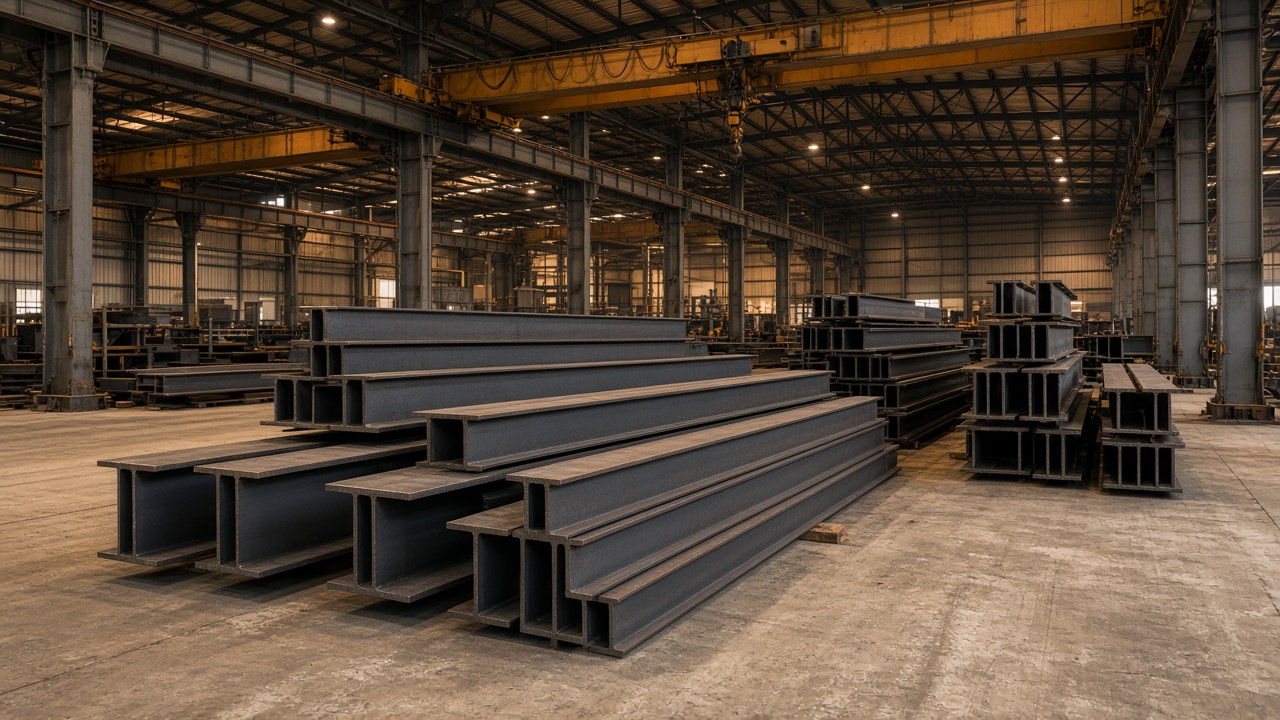
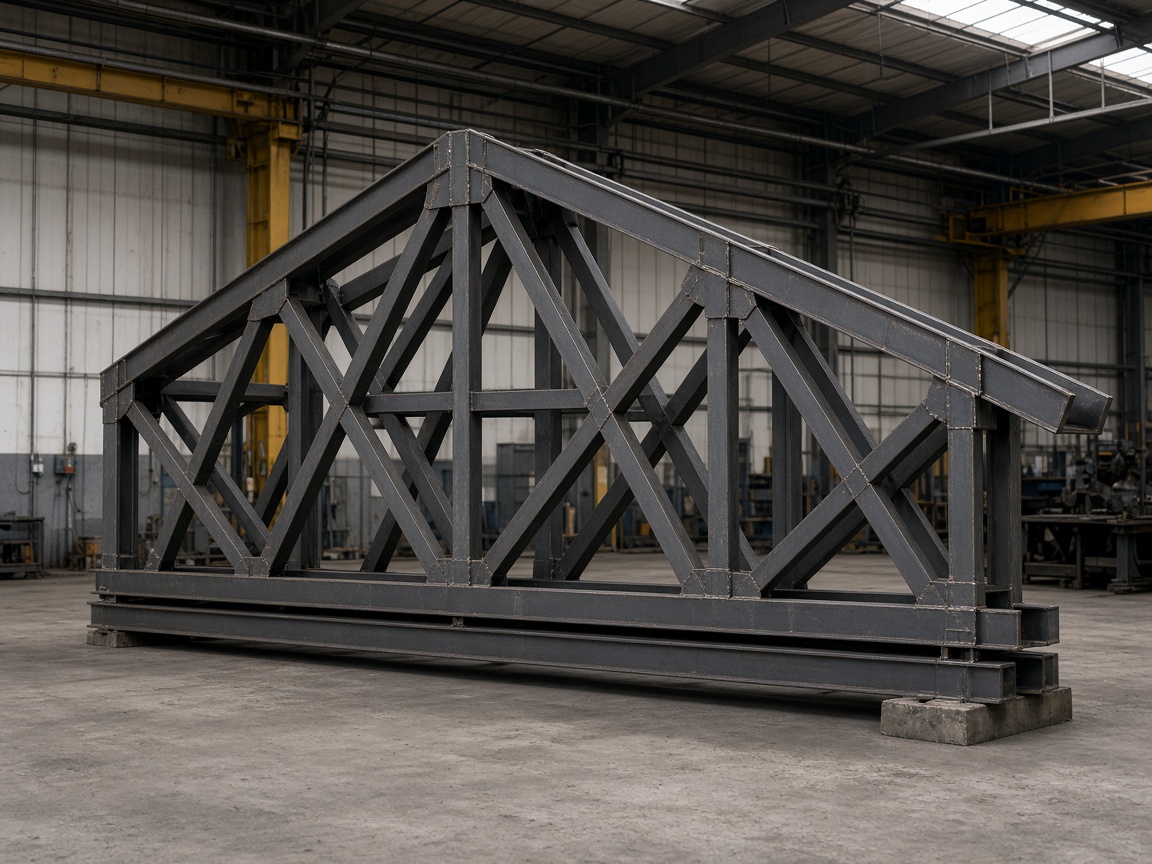
The photographs are illustrative views of structural steel, a truss, cabinets and a workbench, warehouse racking, retail shelving, and a fabrication floor. They are not verified photographs of the MIKS plant, its employees, or a completed project. The image published with the source case is a website mockup and is not used here.
Structural Steel, Furniture, and Storage
Frequently Asked Questions About MIKS
The published range covers construction metal structures, metal furniture and equipment, retail and storage equipment, and construction and installation products. Named items include beams, columns, trusses, insert elements, gates and doors, display stands, metal cabinets and workbenches, storage equipment, medical metal furniture, store shelving, staircases, small architectural elements, prefabricated buildings, and waste disposal systems. Mini equipment for municipal and construction use is also listed. Electrical enclosures are not.
The site separated the families. Construction metal structures, metal furniture and equipment, retail and storage solutions, and construction and installation each had their own section and child pages. About covered history, partners, and certifications. A beam query and a medical-furniture query were not meant to land on one generic metal page.
Competitor research was done inside each production area, and a semantic core mixed broader queries with niche ones. The source names custom construction beams, medical metal furniture, and industrial shelving as examples. Those groups were mapped onto the relevant pages. The size of the core and the competitor names are not published.
Each product line was written in the terminology of that line, with phrases aimed at the queries for that line. The source does not give a page count or a publishing schedule.
Five additional microsites were designed so selected product lines could be found on their own. The source names construction structures, retail equipment, shelving systems, and furniture. Domains, a fifth product line, and results for each site are not given, and the five sites are not described as proven new builds from an empty start.
Comments
Helen ChoIndustrial Marketing Director The page treats MIKS as a plant with several product families. Is the record a metal supplier, or a manufacturer with its own structural and equipment lines?
Maryan PolyakExpertManufacturing Digital Marketing & Web Development Expert A manufacturer. The published range is construction metal structures, metal furniture and equipment, retail and storage equipment, and construction and installation work, plus mini equipment for municipal and construction use. It is not written up as a reseller of someone else’s catalog.
Helen ChoIndustrial Marketing Director Beams and trusses get used in buildings and bridges. Does this case say MIKS built those structures?
Maryan PolyakExpertManufacturing Digital Marketing & Web Development Expert No. The structural list is beams, columns, trusses, insert elements, gates and doors, and display stands. Components of that kind go into buildings, bridges, and other construction. The source does not say MIKS constructed the buildings or the bridges.
Andrej KovacsInformation Architect How was a catalog this wide kept from becoming one metal-products page?
Maryan PolyakExpertManufacturing Digital Marketing & Web Development Expert The site map splits the portfolio. About holds history, partners, and certifications. Construction metal structures hold beams, columns, trusses, insert elements, gates and doors, and display stands. Metal furniture and equipment hold cabinets and workbenches, storage equipment, and medical metal furniture. Retail and storage hold store shelving and display and dividing stands. Construction and installation hold staircases, small architectural elements, prefabricated buildings, and waste disposal systems.
Andrej KovacsInformation Architect I would have added electrical enclosures next to the cabinets. Are they on the source map?
Maryan PolyakExpertManufacturing Digital Marketing & Web Development Expert They are not. Cabinets and workbenches are. Electrical enclosures are not a named line on this case, so they are not added as a category.
Sofia BergSemantic SEO Lead The semantic core is described as high-frequency and niche queries. Which phrases does the source actually name?
Maryan PolyakExpertManufacturing Digital Marketing & Web Development Expert Three examples: custom construction beams, medical metal furniture, and industrial shelving. Competitor research was done inside each production area, including structural metalwork, storage systems, medical-grade furniture, and custom metal fixtures. No keyword count for the core, no volumes, and no competitor names are published. The later figure of more than 1,000 additional keywords is an indexing result, not the size of that core.
Sofia BergSemantic SEO Lead So mapping meant a beam query and a medical-furniture query did not share one URL.
Maryan PolyakExpertManufacturing Digital Marketing & Web Development Expert That is the stated purpose. Dedicated pages followed the semantic core, and descriptions were written for the product line on that page. Exact historic URLs are not reconstructed.
James OkonkwoIndustrial Content Strategist The About section includes certifications. Which standards are named?
Maryan PolyakExpertManufacturing Digital Marketing & Web Development Expert None. The information architecture includes a certifications page. The case does not name a certificate, a standard, or a test method. The product descriptions were written per line, and a page count is not given.
Marcus HaleTechnical SEO Consultant Technical SEO lists speed, mobile, structured data, and links. Which schema types, and was the build Drupal?
Maryan PolyakExpertManufacturing Digital Marketing & Web Development Expert Structured data is named. A schema type is not, so none is claimed. Page-load work, mobile responsiveness, and link structure are the other technical items. Scores are not published. Drupal appears on neighboring case studies on the same source page. It is not the platform named for MIKS.
Marcus HaleTechnical SEO Consultant Five microsites are easy to over-read as five new builds with their own rankings.
Maryan PolyakExpertManufacturing Digital Marketing & Web Development Expert The source says five additional microsites were designed for specific product lines, and it names construction structures, retail equipment, shelving systems, and furniture. That is four named lines for five sites. The fifth line, the domains, and any per-site traffic or rankings are not given. I do not treat them as five sites proven to have been built from scratch.
Priya ShahAnalytics Lead The results mix percentages and a keyword count. Which rows are growth rates, and over what period?
Maryan PolyakExpertManufacturing Digital Marketing & Web Development Expert Growth rates: organic traffic +35%, organic sessions +20%, total sessions +22%, impressions +12%, search clicks +10%, new users +40%, returning users +30%. The keyword row is a count: more than 1,000 additional keywords indexed. The source does not name the measurement window, the baseline, conversions, leads, or revenue.
Priya ShahAnalytics Lead Is the thousand a first-page or top-five total?
Maryan PolyakExpertManufacturing Digital Marketing & Web Development Expert No. The label is keywords indexed. It is not a ranking-position claim, and it is not a percentage.
Laura BennettPaid Search Strategist The closing line says SEO and PPC. Where are the paid-search figures?
Maryan PolyakExpertManufacturing Digital Marketing & Web Development Expert There are none. PPC is named in that closing sentence and nowhere else with a platform, a budget, clicks, or a result. The click row in the results is the SEO click row, +10%, not a PPC click row.
Laura BennettPaid Search Strategist And the engagement length. Two years exactly?
Maryan PolyakExpertManufacturing Digital Marketing & Web Development Expert A collaboration spanning two years or more. The published page does not give a start date or an end date, so the duration is not shown as a closed two-year term.
Have a question about this topic?
Send your question to Maryan Polyak. Relevant questions may be answered in a future expert discussion.
Discuss a similar multi-line plant site
If the plant makes structural steel and also cabinets, storage, and installation products, the site has to keep those lines apart before search can be read.
- Manufacturing
- Manufacturing SEO
- Competitor SEO Analysis
- Manufacturing Keyword Research
- Industrial Website Architecture
- Technical Content Marketing
- Product SEO
- Industrial Website Development
- Manufacturing Website Development
- Application SEO
- Metal Fabrication
- Industrial Manufacturing
- Industrial SEO
- Structural Steel Fabrication
- Custom Metal Products